
The new mods
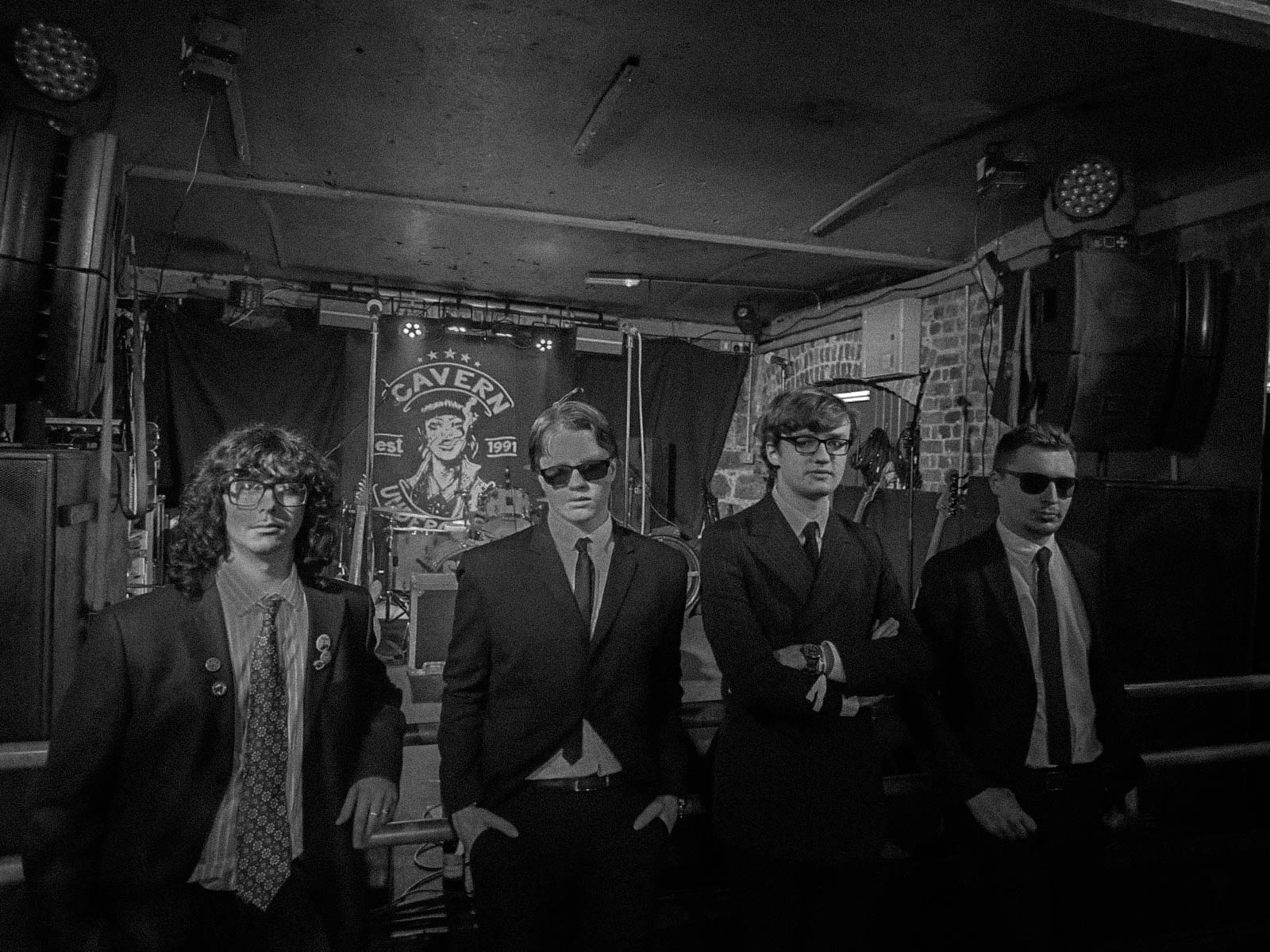
The Hornets are a rhythm and blues band formed in 2017 in the West of London, with Bailey Penny on guitar, Andrew Pearce on bass, Ben Finan on vocals, and Mark Freeman on drums (today replaced by Sam …). They’re currently on tour and kindly met with me just before their gig with Sharp Class at Exeter Cavern, in Devon, in the South West of England.
Q — How is the experience of playing gigs with Sharp Class?
Ben: There aren’t many mod bands in England right now, especially young mod bands, so it’s good to be touring with a band in the same demographic and with the same sort of target audience as us, even though we play more bluesy stuff and they play more punky stuff.
Bailey: It’s good to play with a band of a similar age—they’re all the same age as us. Usually, mod bands are older, but having a few good mod bands on the scene at the same time who are younger is quite nice, instead of always playing with the older guys who are slowing down a bit.
Q — Do you feel that there isn’t much around in that style?
Bailey: Not too much in our scene, really, in terms of mod bands. You get the older guys, like I said. There’s no shortage of bands, but there’s a shortage of new, young bands that play originals, maybe. You get lots of bands playing covers. I mean, we still play covers in our sets because people like hearing something they recognise, and we get a better response to our originals after they’ve heard us competently play something they know.
Q — Do you have a deep connection with mod culture?
Ben: I think I’m the only person in the band who would classify himself as a mod. I’ve been a mod since I was about 16, which was two or three years before I even joined the band. But the rest of the boys are all into the music we play—just not necessarily the mod style.
Bailey: I mean, I wear shirts, but that’s about it. You’re more confident than I am about going out wearing a suit.
Ben: Yeah. There’s a difference between being 60s and being mod, if you know what I mean. That’s sort of the distinction in the band.
Q — Your influences come from the 60s, rhythm and blues, rock… You’ve played cool covers from bands like The Sonics and Count Five. Do you all share that same taste in music or the same influences?
Bailey: The garage rock stuff is really my influence, I suppose. The 60s rhythm and blues was mainly my thing. And then you (Ben) are more into the revival stuff, the modern revival—you like The Jam and all that.
Ben: Yeah, that’s what got me into the whole mod thing: The Jam and the mod revival. And from that, I went backwards and got into 60s rhythm and blues and all that stuff.
Andrew: Outside of the band, I don’t listen to any of this sort of music. I’m more into hard rock and classic stuff—Queen, Oasis, Foo Fighters. But playing this music, I really do enjoy it, you know?
Sam: I grew up listening to everything my parents played on vinyl in the car. Mainly 70s stuff. But playing with these boys, I’ve just gotten more and more into this style of music because I’m constantly hearing it through rehearsals and practice. Slowly you start going, “I like this band, I like this style,” and you just get deeper into their discographies.
Bailey: We’ve got a new one actually. A band from Cornwall, though they’re now based around London. They’re called The Forty-Fours. They’re much more Merseybeat, but they’re the most 60s-sounding band other than us. So I’d say they’re the only band that’s really caught our attention—other than Sharp Class, who we’re touring with.
Ben: A bit of bluegrass and country, to be honest… anything. I listen to a lot of music. I grew up listening to indie music from the 2000s and 2010s before I got into the mod scene and 60s music. So it does fluctuate quite a bit.
Q — How was the experience of the Giorgio Crawdaddy book release gig and playing with Dave Ambrose (Fleetwood Mac)?
Bailey: Well, it was interesting. We met Francis, the guy who wrote the album. Another band had been booked to play his book launch, but they dropped out, so on the day of the gig we were hired to play it. He seemed to like our stuff and pitched the album to us.
It was held at the original Crawdaddy venue, and then off our own backs we played the other Crawdaddy venue—which I think might both be closed now, I’m not sure.
He flew over here to record the album with us. Francis was a personal friend of Giorgio Gomelsky, the manager of The Rolling Stones and The Yardbirds. He wrote the album; we were allowed to arrange the backing tracks, and he came in to direct how he wanted it sung.
Francis lives in New York. He stayed on my street in a hotel and every morning at 10 a.m. we’d go down to the studio and record. It was good. I think we have the record and some goodies we’re selling tonight. Please buy one, everyone in Spain. Please buy one.
Q — You released a couple of songs recently. Do you feel like you want to explore anything different soon?
Bailey: Yeah. The Hornet’s Nest album was with our previous lineup, so I’m the only one who carried over from that. We’re currently working on a load of new singles and a new album, which should be out in a few months. All completely original again. It’ll be on CD and vinyl, and released through Heavy Soul Records, which is also Sharp Class’s label.
Ben: There are a lot of new sounds on this album compared to the last one. There are tunes that go into different brackets—some surf-rocky stuff, for example. It changes things up quite a bit. I’ve written one, finally. My one song on the album. I’m like Ringo Starr.
Q — You’ve played some emblematic venues, and this year you’ll be playing the Cavern Pub and then the 100 Club in London. What are your expectations?
Andrew: It’s fun, actually. To be playing on the same stage as some of the big names… The Beatles played there. Arctic Monkeys, Paul McCartney. So to be standing where those people once were…
Q — Where did you usually go to listen to music in London? Was there a venue that was particularly special to you?
Ben: The Marquis in Covent Garden is probably a hotspot for mod culture—there’s a lot of that there. The Spice of Life is another one. Mainly Soho and Camden. The Dublin Castle in Camden Town as well. The current scene seems to be in Soho.
Q — We are called Supporter, so here’s the inevitable question: any sports you follow or teams you support?
Sam: I live in Twickenham, so the rugby scene there is huge—Twickenham Stadium and all that. I follow the Six Nations at the moment. England aren’t doing well, but oh well, we’ll see how it goes.
Q — We could say you’re supporting Sharp Class today.
Ben: Yeah, for sure.

The new mods
The Hornets son una banda de rhythm and blues formada en 2017 en el Oeste de Londres, con Bailey Penny a la guitarra, Andrew Pearce al bajo, Ben Finan al microfono y Mark Freeman a la batería (actualmente reemplazado por Sam …). Están de gira y tuvieron la amabilidad de recibirme justo antes de su concierto junto a Sharp Class en Exeter Cavern, en Devon, en el suroeste de Inglaterra.
P — ¿Cómo es la experiencia de dar conciertos con Sharp Class?
Ben: Ahora mismo no hay muchas bandas mod en Inglaterra, especialmente bandas mod jóvenes, así que está bien hacer una gira con un grupo del mismo origen y con un público objetivamente similar al nuestro, aunque nosotros hacemos cosas más blues y ellos algo más punk.
Bailey: Es bueno tocar con una banda de edad similar; ellos tienen más o menos nuestra misma edad. Normalmente las bandas mod son mayores, así que tener unas cuantas bandas mod buenas en la escena al mismo tiempo, siendo jóvenes, es algo bastante agradable, en lugar de tocar siempre con los músicos más mayores, que ya van bajando el ritmo.
P — ¿Sentís que no hay mucho movimiento ahora mismo dentro de ese estilo?
Bailey: No demasiado dentro de nuestra escena, en lo que respecta a bandas mod. Están los músicos mayores, como decía. No faltan bandas, pero sí faltan bandas nuevas y jóvenes que hagan canciones originales. Hay muchísimos grupos de versiones. Nosotros también tocamos versiones porque a la gente le gusta escuchar algo que reconoce, y recibimos una mejor respuesta a nuestros temas originales cuando ya nos han oído tocar algo que conocen bien.
P — ¿Tenéis una conexión profunda con la cultura mod?
Ben: Creo que soy el unico de la banda que se clasificaría a sí mismo como mod. Soy mod desde los 16 años, dos o tres años antes de entrar en la banda. Pero el resto de los chicos están metidos en la música que tocamos, solo que no necesariamente en el estilo mod.
Bailey: Yo llevo camisas, pero poco más. Tú (Ben) tienes más confianza que yo para salir con traje.
Ben: Sí, hay una diferencia entre ser “sesentero” y ser mod, si sabes a lo que me refiero. Y ahí está un poco la diferencia dentro del grupo.
P — Vuestras influencias vienen de los 60, del rhythm and blues, del rock… Habéis tocado versiones muy buenas de bandas como The Sonics o Count Five. ¿Compartís todos los mismos gustos o tenéis influencias distintas?
Bailey: El garage rock es realmente mi influencia. El rhythm and blues de los 60 era sobre todo lo mío. Y tú (Ben) estás más metido en lo del revival mod —te gusta The Jam y todo eso.
Ben: Sí, eso fue lo que me metió en todo lo mod: The Jam y el mod revival. Y a partir de ahí tiré hacia atrás y entré en el rhythm and blues de los 60 y todo ese rollo.
Andrew: Fuera de la banda, no escucho este tipo de música. Soy más de hard rock y rock clásico o mas moderno: Queen, Oasis, Foo Fighters. Pero tocar esta música me gusta mucho, la verdad.
Sam: Yo crecí escuchando todo lo que mis padres ponían en vinilo en el coche. Sobre todo música de los 70. Pero tocando con estos chicos me he ido metiendo cada vez más en este estilo porque lo escucho constantemente en ensayos. Y poco a poco vas diciendo “me gusta este grupo, me gusta este estilo”, y te metes más y más en sus discografías.
P — ¿Hay algún otro artista o banda que os inspire personalmente ahora mismo?
Bailey: Sí, tenemos una nueva banda favorita. Son de Cornualles, aunque ahora se mueven por Londres. Se llaman The Forty-Fours. Son mucho más Merseybeat, pero son la banda más “años 60” aparte de nosotros. Así que diría que son la única banda que realmente nos ha llamado la atención, aparte de Sharp Class, con quienes estamos de gira.
Ben: Un poco de bluegrass y country también… escucho de todo. Crecí escuchando indie de los 2000 y 2010 antes de meterme en el mundo mod y en la música de los 60. Así que varía bastante.
P — ¿Cómo fue la experiencia del concierto de presentación del libro de Giorgio Crawdaddy y tocar con Dave Ambrose (Fleetwood Mac)?
Bailey: Pues fue interesante. Conocimos a Francis, el tipo que escribió el disco. Habían contratado a otra banda para tocar en la presentación de su libro, pero cancelaron, así que el mismo día del concierto nos llamaron a nosotros. A Francis pareció gustarle lo que hacíamos y nos presentó la idea del álbum.
El evento fue en el Crawdaddy original, y luego por nuestra cuenta tocamos también en el otro Crawdaddy, que creo que ahora están cerrados los dos, no estoy seguro.
Él voló hasta aquí para grabar el disco con nosotros. Era amigo personal de Giorgio Gomelsky, el mánager de los Rolling Stones y los Yardbirds.
Él escribió las canciones; a nosotros nos dejó encargarnos de los arreglos instrumentales, y luego venía para decirnos cómo quería que se cantaran. Francis vive en Nueva York. Se hospedó en un hotel en mi calle y todas las mañanas a las 10 nos íbamos al estudio a grabar. Fue genial. Creo que esta noche tenemos el disco y algunas cosas que vendemos. Por favor, comprad uno, todos los que estáis en España. Por favor, comprad uno.
P — Habéis publicado un par de canciones recientemente. ¿Sentís que queréis explorar algo diferente pronto?
Bailey: Sí. El álbum The Hornet’s Nest fue con la formación anterior, así que soy el único que continúa desde entonces. Ahora estamos trabajando en varios singles nuevos y en un nuevo álbum, que debería salir en unos meses. Todo original otra vez. Saldrá en CD y vinilo, y lo publicará Heavy Soul Records, nuestro sello, que también es el de Sharp Class.
Ben: Hay muchos sonidos nuevos en este disco comparado con el anterior. Hay canciones que van en direcciones distintas: algunas con un sonido más surf rock, por ejemplo. Cambia bastante las cosas. Yo he escrito una, por fin. Mi única canción del álbum. Soy como Ringo Starr.
P — Habéis tocado en algunos locales emblemáticos, y este año tocaréis en el Cavern Pub en Liverpool y luego en el 100 Club en Londres. ¿Qué expectativas tenéis?
Andrew: Es divertido, la verdad. Tocar en el mismo escenario donde han estado grandes nombres… los Beatles tocaron ahí. Arctic Monkeys, Paul McCartney. Estar en el mismo sitio donde estuvieron ellos…
P — ¿Había algún sitio especial al que ibais a escuchar música en Londres? ¿Algún local especialmente significativo para vosotros?
Ben: The Marquis, en Covent Garden, es probablemente un punto clave para la cultura mod; hay mucho de eso por allí. The Spice of Life es otro. Sobre todo en Soho y Camden. Y The Dublin Castle, en Camden Town. La escena actual parece estar en Soho.
P — Nos llamamos Supporter, así que aquí va la pregunta inevitable: ¿seguís algún deporte o equipo?
Sam: Vivo en Twickenham, así que la escena del rugby allí es enorme —el Estadio de Twickenham y todo eso. Sigo el Seis Naciones ahora mismo. Inglaterra no va bien, pero bueno, ya veremos qué pasa (Francia gano el torneo ese mismo fin de semana).
P — Podemos decir que hoy apoyáis a Sharp Class.
Ben: Sí, desde luego.

Great band , come no guys !
Fab band, you’re already in the media!
Muy acertado el toque cultural que introducís en revista Supporter; más cuando descubrís bandas musicales como está. Buena mezcla con el multilingüismo.